
[rt_reading_time label=”Reading Time:” postfix=”minutes” postfix_singular=”minute”]
I’m currently reading a book by the one and only Derren Brown. It’s called ‘Happy: Why More or Less Everything is Absolutely Fine‘.
Honestly, I found the title a little off-putting because books on happiness are a dime a dozen, and often full of shakey content at best. However, I couldn’t help but be intrigued by this one. I’ve always had a lot of respect for Derren Brown, so I was keen to hear what he had to say on the subject.
In the book, there’s a big focus on Greek philosophy, particularly the Stoic school of thought. An idea put forward by the philosopher Epictetus really struck me as I was reading, so I’d like to share it here.
What’s The Big Idea?
Odds are, you will have heard this before. Many great ideas of philosophy have stuck around, and we actually end up hearing them all of the time. The idea is:
Don’t try and take control of things you don’t have control over.
Doesn’t seem like a revolutionary idea, does it? It actually seems blatantly obvious that we shouldn’t try to control things that we can’t, but stay with me! I can assure you that I’ve noticed a real shift in my mindset over the last couple of weeks as a result of giving this some thought. Allow me to explain…
I’ve copied this table from Derren’s book (cheers Dazzers!). It outlines what Epictetus believes we do and don’t have control over:
| Under Our Control | Not Under Our Control |
|---|---|
| Our thoughts | What people think |
| Our actions | What people think of us |
| How people behave | |
| How well people do their jobs | |
| How rude people are | |
| Other people’s habits | |
| Other people’s success | |
| How well other people listen to us | |
| How much our partner behaves as we wish him/her to | |
| What our partner fears or finds stressful | |
| Everything else |
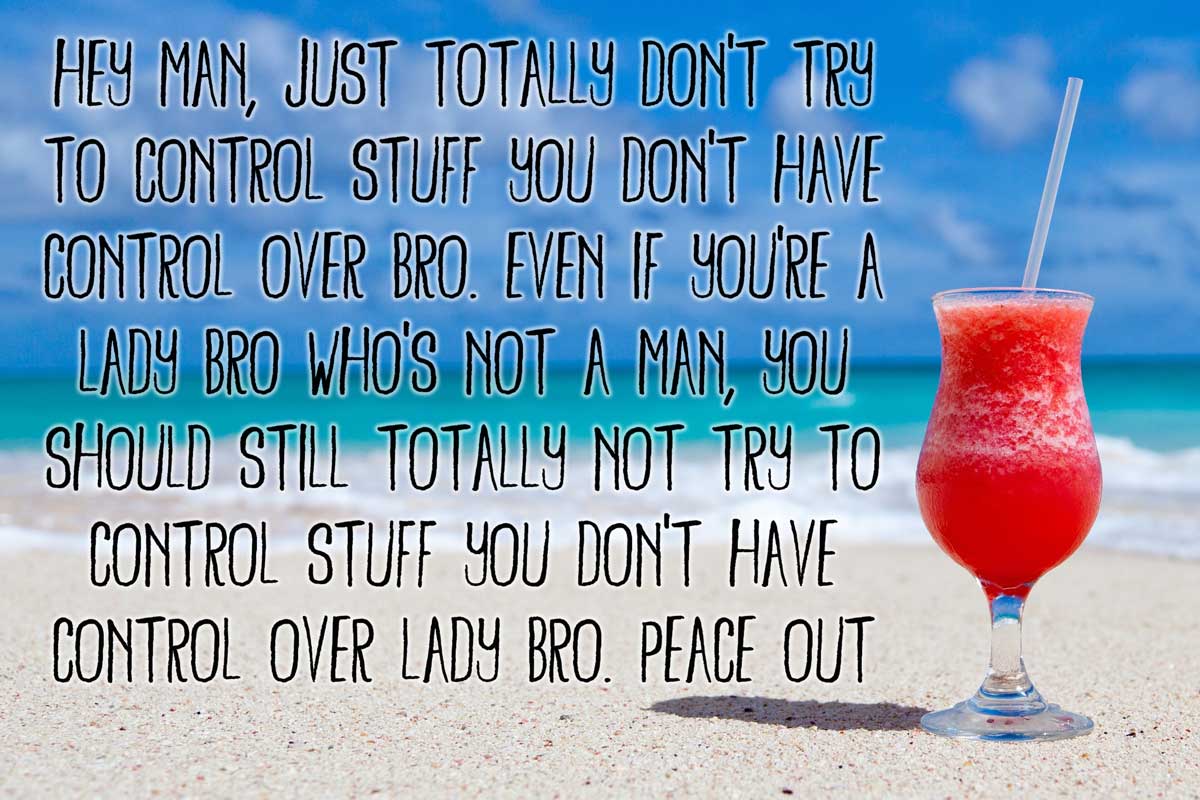
Again, this may seem obvious to you, and I’ve no doubt most of you have seen at least a dozen pictures of beaches with a quote in the middle telling you to leave alone what you can’t control. But actually taking the time to consider these ideas and apply them to our own lives is a completely different (and far more useful) activity.
Outline
If we are frustrated by someone else’s actions towards us, it’s nothing short of miraculous how much it can help to notice that we have no control over those actions. It seems to me that a lot of the frustration we tend to feel in these situations actually comes from the fact that we can’t mould the outcome exactly as we’d like. However, once we realise this, it makes the whole situation significantly easier to manage.
Now, this can seem counter-intuitive because in some cases we can actually change the situation with our actions, but what’s important to realise is that there’s absolutely no guarantee of this happening. If someone is doing something annoying and we tell them to stop, that does not mean they will stop. Only they can control whether or not they are going to carry on doing whatever it is that you find annoying.
My Mission to You
Recently I was watching a video of a YouTuber called Amy Landino about how she goes about reading a book. She talks about always making a point of taking an idea from a non-fiction book that she can then apply directly to her own life. So in that spirit, why not take five minutes, grab a bit of paper and try applying this idea to your own life?
Step 1
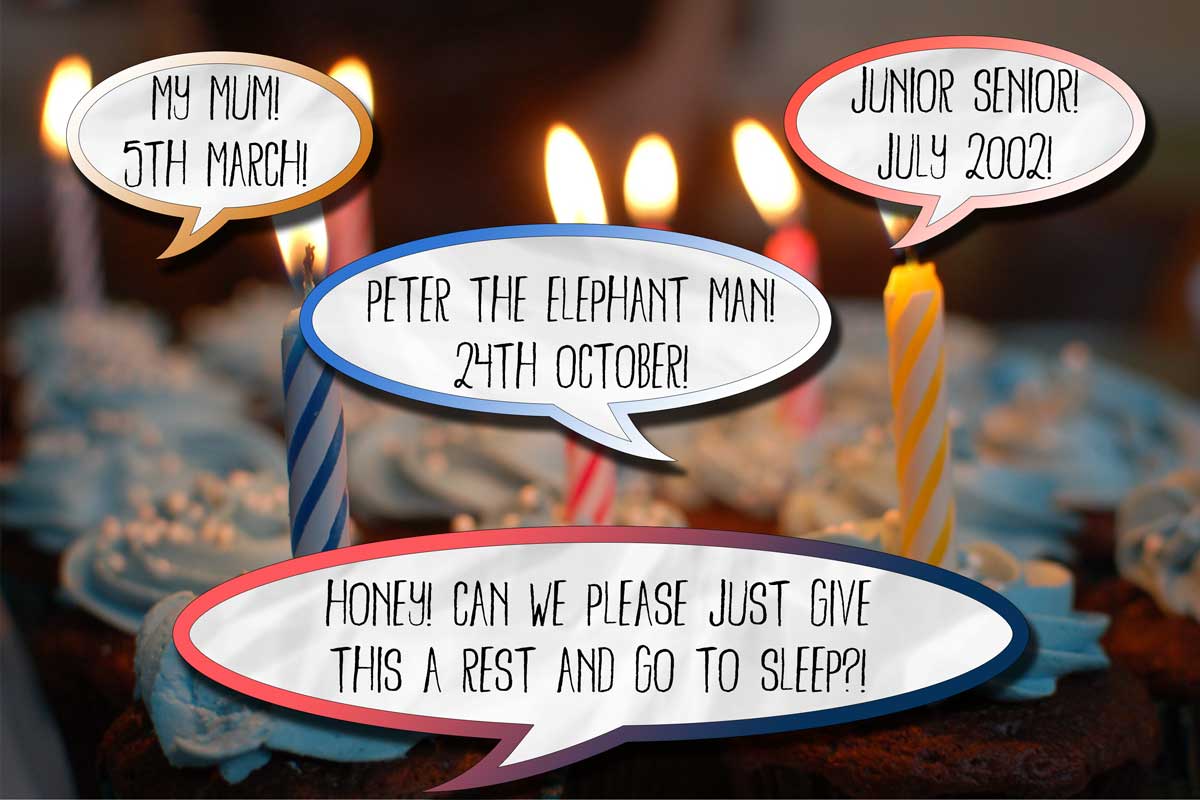
Try to think of the situation that’s bothering you the most at the moment. Whether it’s someone at work that won’t shut up about how great their pet elephant is, your bus always running late, hitting all of the red lights on the way to work… or your partner’s new habit of insisting that if they don’t shout all of the birthdays they can remember before bed, then they’ll just never manage to get to sleep.
Step 2
Remember that you have control over your own thoughts and actions, so use this superpower to realise that you don’t have direct control over the situation – if Peter wants to re-live every moment spent with his elephant around the water cooler in excruciating detail, it has everything to do with him, and essentially nothing to do with you. If your partner feels like they need to get their birthday shout on, understand that you can’t force them to stop doing it because only they have control over their own thoughts and actions.
Step 3 (Optional)
The level of control in the above examples does differ to a certain extent. There’s very little you can do about the transport issues, but you can mention to Peter the elephant man that it might be beneficial for him to find an additional hobby, or explain to your partner that you feel like it would be helpful for everyone involved if you could try an audiobook to relax rather than the current method.
The important part of this step is making an effort to not to put any investment into the outcome, really understanding that only the other party have the power to change their actions.
Step 4
Feel like a huge weight has been lifted as the knowledge that you don’t have any control over the situation sinks in, and then begin to realise that because you don’t have control there’s actually no reason to feel any stress or anxiety about the outcome.
As I say, making this tiny tweak in my way of thinking has been a real game-changer for me over the last couple of weeks, and I’m confident it will continue. It may seem overly simple on its face, but these immensely helpful things so often do.
Let me know the number of birthdays you can remember in the comments!
If you would like more along these lines, might I suggest another perspective-changing idea for handling those day-to-day problems, or perhaps you could have a little look at why you should set intentions rather than goals?
[cs_gb id=1221]


Leave a Reply